Saturday, June 18, 2022

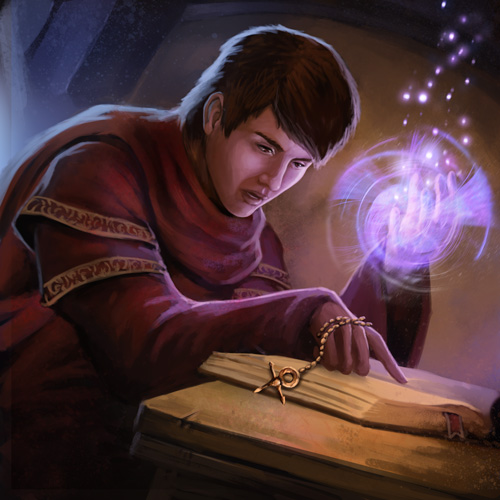
[CLASS] Dungeon! - The Cleric

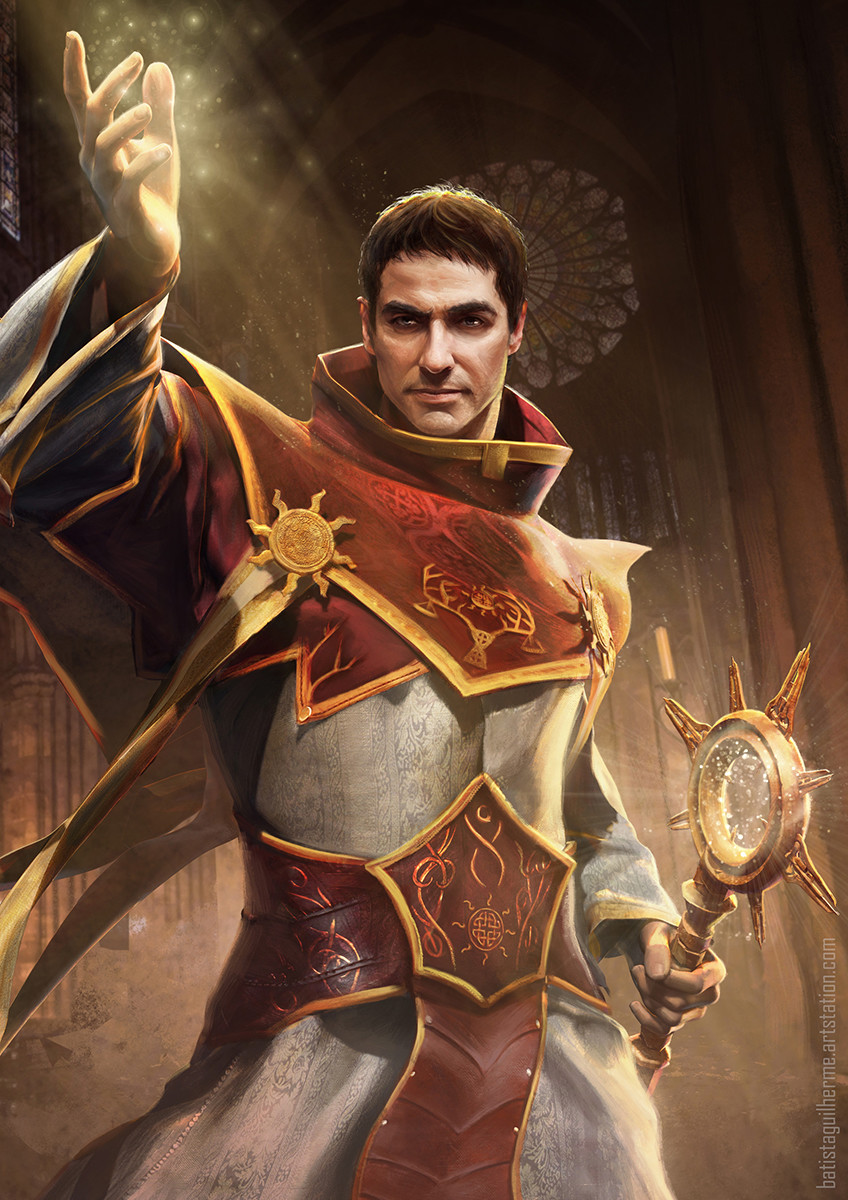
The Cleric

HP: +1d8 each Level, minimum of +4

AC: +1 each Level

AB: +1 each 2nd Level

Save: -1 each 2nd Level

Skills: +1 Skill Pip each Level


At 1st Level, you dedicate yourself to a god or belief system. You gain the ability to Harm or Heal targets in the name of this belief. Using an Action, you may select a target within Short Range. You may then choose to either Harm or Heal the target. If you Harm them, they take Damage equal to 1d10 + your Cleric Level and may roll a Save, taking half as much Damage on a success. If you Heal them, they are Healed for a value of HP equal to 1d10 + your Cleric Level. Once you have used this ability, you must finish a Long Rest before you may use it again. Finally, you may use 1 Spell Point to use this Ability again even if you haven't finished a Long Rest yet.


At 2nd Level, you have proven your worth and gain the ability to Cast Spells. You learn a number of Spells equal to your Cleric Level and you gain 2 Spell Points (SP). Using 1 Spell Point, you may cast any Spell you know. You regain used Spell Points after a Long Rest.


At 3rd Level, your belief manifests a new power within you. Choose one of the options below.

  • Respite: Over the course of a Short Rest, you may use this ability to Heal yourself and up to 5 nearby allies for 2d6 HP. Once you have used this ability, you must finish a Long Rest before you may use it again. You may use 1 Spell Point to use this ability again even if you haven't finished a Long Rest yet.
  • Striking: When you deal Damage to a target, you may use this ability to deal an additional 2d4 Force Damage to the target. Once you have used this ability, you must finish a Long Rest before you may use it again. You may use 1 Spell Point to use this ability again even if you haven't finished a Long Rest yet.
  • Turn: As an Action, you may hold aloft a holy symbol and use this ability to target up to 5 creatures within Short Range. Each target must roll a Save. If they fail, they gain the Affliction Afraid 3. If they succeed, they instead gain the Affliction Afraid 1. Once you have used this ability, you must finish a Long Rest before you may use it again. You may use 1 Spell Point to use this ability again even if you haven't finished a Long Rest yet.


At 4th Level, you may gain one of the options below.

  • You gain 1 additional Spell Point and +1 AB.
  • You gain 2 additional Spell Points.


At 5th Level, your faith bolsters your combat. Choose one of the options below.

  • Once per Round and on your Turn, you may attempt a single Weapon Attack as a Free Action.
  • Whenever you use a Spell Point, you may also Heal yourself or an ally within Short Range for a value of HP equal to 1d4 + your Cleric Level.


At 6th Level, you may gain one of the options below.

  • You gain 1 additional Spell Point and +1 AB.
  • You gain 2 additional Spell Points


At 7th Level, your belief awakens further power within you. Choose one of the options below.

  • Channel: Over the course of 10 minutes, you may use this ability to regain 1d2 Spell Points. Once you have used this Ability, you must finish a Long Rest before you may use it again.
  • Rebuke: As an Action, you may hold aloft a holy symbol and use this ability to target a single creature within Short Range. The target must roll a Save. If they fail, they gain the Affliction Stunned 1. If they succeed, nothing happens. Once you have used this Ability, you must finish a Long Rest before you may use it again. You may use 1 Spell Point to use this ability again even if you haven't finished a Long Rest yet.
  • Vitality: When you or an ally within Medium Range would die, you may use this ability to allow the target to remain at 1 HP instead. Once you have used this ability, you must finish a Long Rest before you may use it again. You may use 1 Spell Point to use this ability again even if you haven't finished a Long Rest yet.


At 8th Level, you may gain one of the options below.

  • You gain 1 additional Spell Point and +1 AB.
  • You gain 2 additional Spell Points.


At 9th Level, you become driven by your faith in combat. Choose one of the options below.

  • Once per Round and on your Turn, you may attempt a single Weapon Attack as a Free Action. This stacks with the 5th Level equivalent if you also took this at 5th Level.
  • Whenever you deal Damage or provide Healing, you deal +5 Damage or provide +5 Healing.


At 10th Level, you have become a devout servant of your faith. You become so well known, your god or other spiritual leader reaches out to you and offers you a choice; you may occasionally channel their power, becoming their Avatar, or you may create a Temple. Details for both options are below.

  • Avatar: You gain the ability to occasionally channel the power of your god or spiritual leader. As an Action, you may begin to channel this power. For the next minute, you take -5 Damage (you take at least 1 Damage), you deal +5 Damage, and you provide +5 Healing. Additionally, you cannot die during this time. You can still be reduced to 0 HP, but you will remain alive and continue to fight. If you are still at 0 HP when the minute ends, you will then die as normal. Once you have used this Ability, you must finish 5 Long Rests before you may use it again.
  • Temple: You are sought out by 1d6 + 10 1st Level Clerics who follow your same belief system. They will build your Temple in a valid location over the course of 50 days. Once completed, you will lead the Temple and these Clerics will follow your commands, as long as they do not violate their faith. Once up and running, your Temple will generate 2d6 Gold per day in tithes. Finally, you and your allies may successfully rest within your Temple in half the normal time due to its accommodations.

Friday, June 17, 2022

[CLASS] Dungeon! - The Barbarian (OLD)

You will notice that this post has the label OLD. That is because this post is out-of-date with the current design of Dungeon! and will no longer be supported. However, because of the drastic differences, this post will remain as an optional Class and relic of the past. The version of The Barbarian that Dungeon! now supports can be found here.


The Barbarian (OLD)

HP: +1d12 each Level, minimum of +6

AC: +1 each 2nd Level

AB: +1 each Level

Save: -1 each 2nd Level

Skills: +1 Skill Pip each Level


At 1st Level, you harness the true power of one of your emotions. For most Barbarians, this is their rage. When you Attack, you may use this Ability to unleash yourself into a state of this emotion. While in this state, you deal +1 Damage and take -1 Damage. You take at least 1 Damage. This state will persist until combat ends, and it will not function out of combat. Once you have used this Ability, you must finish a Short Rest before you may use it again.


At 2nd Level, you can momentarily toughen yourself against Damage. When you take Damage, you can use this Ability to reduce the Damage taken by 2d4. You take at least 1 Damage. You may only use this Ability once per combat.


At 3rd Level, your emotion has granted you additional power. Choose one of the following benefits that is closest to the emotion you chose. You gain this benefit while you are in your powerful state of emotion.

  • Calm: You are Healed for 2 HP at the end of each Round until combat ends.
  • Defiance: You gain +1 on Attack Rolls.
  • Pain: You take an additional -1 Damage.
  • Sorrow: You gain +1 AC.
  • Rage: You deal an additional +1 Damage.


At 4th Level, your powerful emotion does not waiver. While in your powerful state of emotion, you are immune to the effects of the Afraid Affliction and the Provoked Affliction.


At 5th Level, your emotions fuel your combat further. Once per Round and on your Turn, you may attempt a single Weapon Attack as a Free Action.


At 6th Level, your powerful state of emotion becomes even stronger. Instead of dealing +1 Damage and taking -1 Damage while in this state, you now deal +2 Damage and take -2 Damage.


At 7th Level, your emotion has become even more powerful. The option you chose at 3rd Level is replaced with the advanced version shown below. You gain this benefit while you are in your powerful state of emotion.

  • Calm: You are Healed for 4 HP at the end of each Round until combat ends.
  • Defiance: You gain +2 on Attack Rolls.
  • Pain: You take an additional -2 Damage.
  • Sorrow: You gain +2 AC.
  • Rage: You deal an additional +2 Damage.


At 8th Level, your emotion becomes untamable. You no longer need to Short Rest to unleash your powerful state of emotion again, simply being able to unleash it at will. It still only works in combat, and it still ends when combat ends.


At 9th Level, you can allow your emotion to lash out physically. After you are Attacked or targeted by a Spell (hit or miss), you can use this Ability to attempt a single Weapon Attack, even if it is not your Turn. You may only use this Ability once per Round.


At 10th Level, you have become a paragon of Barbarian culture. This renown allows you to gather enough followers to either form a Clan or form a War Band. Details for both options are below.

  • Clan: You gather 1d20 + 50 clan members who have limited combat ability. However, they will create a village in a valid location over the course of 25 days. Once completed, you will rule over the village. Once up and running, this village will generate 1d6 Gold per day, and one 1st Level Barbarian per week. These new recruits will follow your commands but prefer to protect the best interests of the village. Finally, you and your allies may successfully rest within this village in half the normal time due to its accommodations.
  • War Band: You gather 1d10 + 20 2nd Level Barbarians who will travel with you and follow your every command. They will follow you into combat without question and will fight to the death.

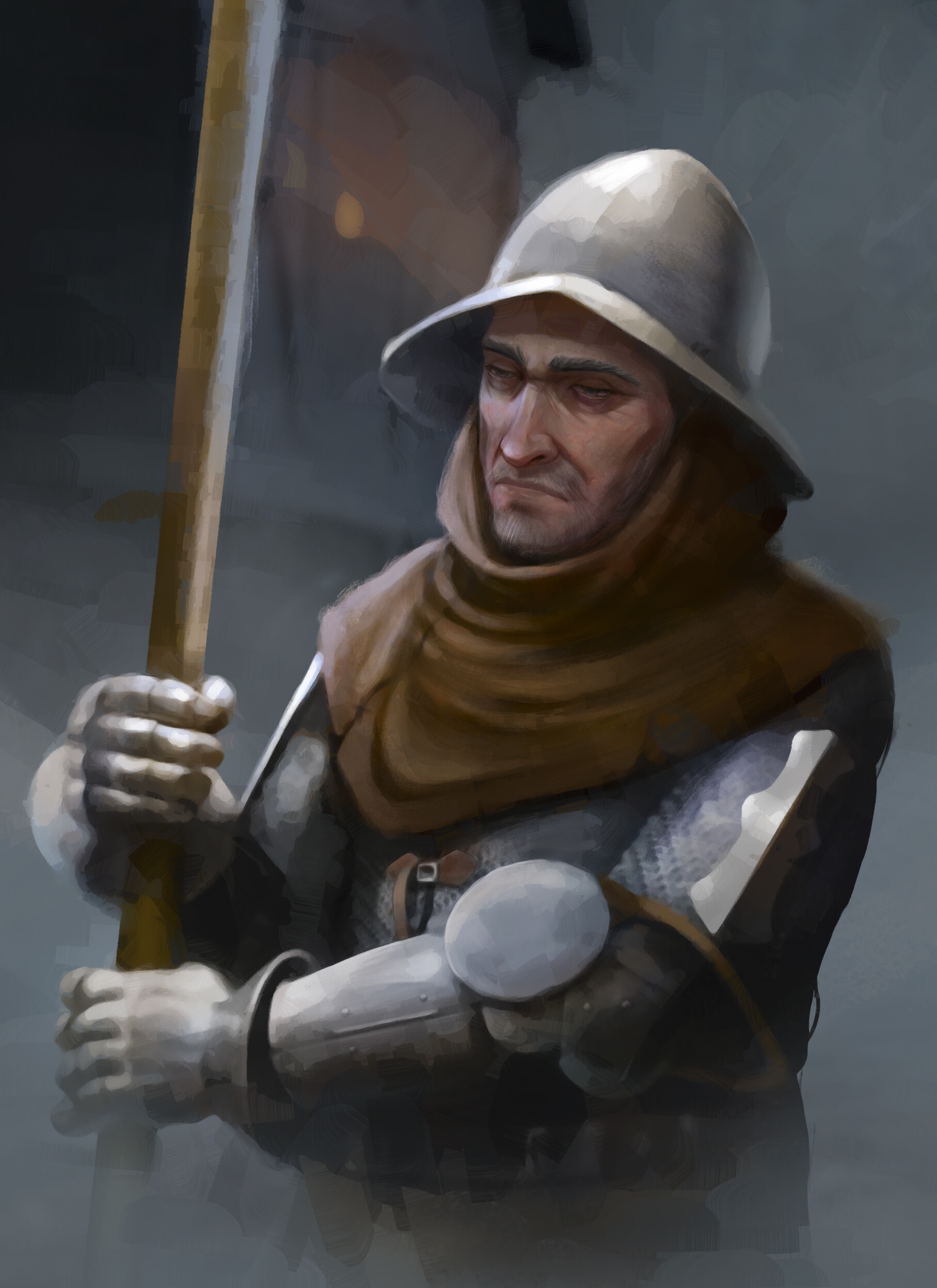
[CLASS] Dungeon! - The Fighter

The Fighter

HP: +1d10 each Level, minimum of +5

AC: +1 each Level

AB: +1 each Level

Save: -1 each 2nd Level

Skills: +1 Skill Pip each Level


At 1st Level, your fighting spirit allows you to press on even when all seems lost. When you Attack, you may use this Ability to Heal yourself for a value of HP equal to (1d4 + your Fighter Level). Once you have used this Ability, you must finish a Long Rest before you may use it again.


At 2nd Level, you have trained yourself to better utilize a certain type of Weapon, making it your Favored Weapon. Choose 1 type of Weapon, such as a Crossbow, Longsword, or Spear. You deal +1 Damage with your Favored Weapon.


At 3rd Level, you have developed a certain fighting style. Choose one of the benefits below.

  • Backline: If you Attack an enemy at Medium Range or further, you have +2 on the Attack Roll.
  • Defensive: You gain +1 AC.
  • Duelist: You may use this Ability to dodge a non-Critical Hit Attack. You must use this Ability before the Damage is announced, and you may only use this Ability once per Combat.
  • Frontline: If you Attack an enemy at Close Range, they are unable to Move to a different Range that Round.
  • Offensive: You deal +1 Damage with Weapons.
  • Protector: Once per Round, you may reduce the Damage an ally in Close Range takes by 1d6. They take at least 1 Damage.
  • Warmage: You gain the ability to Cast Spells. You learn 2 Spells and you gain 2 Spell Points (SP). Using 1 Spell Point, you may cast any Spell you know. You regain used Spell Points after a Long Rest.


At 4th Level, you become more experienced with your Favored Weapon. You deal an additional +1 Damage with your Favored Weapon.


At 5th Level, you have become a fluid fighter. Once per Round and on your Turn, you may attempt a single Weapon Attack as a Free Action.


At 6th Level, your Weapon expertise becomes more diverse. You may choose a 2nd Favored Weapon. Also, you deal an additional +1 Damage with your Favored Weapons.


At 7th Level, your fighting style becomes more advanced. The fighting style you chose at 3rd Level becomes altered as shown below.

  • Backline: If you Attack an enemy at Short Range or further, you now have +3 on the Attack Roll.
  • Defensive: You gain +1 additional AC.
  • Duelist: When you dodge an Attack using your 3rd Level ability, you may also attempt a single Weapon Attack.
  • Frontline: If you Attack an enemy at Close Range, they are unable to Move to a different Range until you do.
  • Offensive: You deal +1 additional Damage with Weapons.
  • Protector: Once per Round, you may now reduce the Damage an ally in Close Range takes by 2d6. They take at least 1 Damage.
  • Warmage: You gain 2 additional Spell Points and learn 2 additional Spells.


At 8th Level, you have nearly mastered your Favored Weapons. While you are conscious, you cannot be disarmed of your Favored Weapons. Also, you deal an additional +1 Damage with your Favored Weapons.


At 9th Level, you have mastered the art of combat. Twice per Round and on your Turn, you may attempt a single Weapon Attack as a Free Action. Also, you deal an additional +1 Damage with your Favored Weapons.


At 10th Level, you have become a living legend. This legendary status allows you to do one of the following; create a Stronghold you command, or craft a Legendary Weapon. Details for both options are below.

  • Stronghold: You amass 1d20 + 30 1st Level Fighters who seek to serve you and fight alongside you, following your every command. They will build your Stronghold in a valid location over the course of 100 days. Once completed, you will rule over the Stronghold and any local settlements that seek your protection. Once up and running, your Stronghold will generate 1d6 Gold per day, with a bonus 1d6 to that rate for each settlement you protect. Finally, you and your allies may successfully rest within your Stronghold in half the normal time due to its accommodations.
  • Legendary Weapon: You come across, create, or earn a magical Weapon of legendary renown. This magical Weapon may be any Weapon of your choice, and you may choose up to three magical effects from the Magical Weapons section of the Magic Item list. Your GM has the right to veto these magical effects or limit how many you may choose. Finally, bestow the Weapon with a fitting name and legendary story.


Dungeon! - Core Spell List

Below you will find the Spell List for Dungeon!

Spells in Dungeon! are not separated by Class, Level, nor are they divided into magical domains. When you learn a Spell, you may choose any Spell.

If you find issue with the fact that a Mage can Heal and a Cleric can Cast Fireball, simply work with your GM to choose which Spells may be forbidden or unavailable to certain classes.

When it comes to Casting a Spell, all Spells require an Action to Cast, unless otherwise stated. Also, all Spells cost 1 Spell Point (SP) to Cast.

Finally, Spells in Dungeon! scale in power with the Caster’s Level. The letter "X" represents the Casters Level in the Spells below. If a Monster Casts a Spell, it uses its CR instead. In situations where "X" is divided and the outcome is not a whole number, always round down to a minimum of 1.


Spell List, A - Z

  • Acid Blast: Choose a target within Short Range. They take (1d10 + X) Acid Damage and they must roll a Save. If they succeed, the Damage they take is halved.
  • Bane: Choose (X/2) target(s) within Short Range. They must subtract 1d4 from Attack Rolls for 3 Rounds.
  • Bless: Choose (X/2) target(s) within Short Range. They may add 1d4 onto Attack Rolls for 3 Rounds.
  • Blink: The user may instantly teleport up to (X/2) Range(s) away.
  • Bookspeak: The user may touch a book and ask the book (X/2) question(s) about its contents. The user instantly learns the answer to these questions, assuming the book's contents can answer these questions.
  • Charm: Choose a target within Short Range. They must roll a Save. If they are hostile towards you, they have Advantage on this Save. If they fail, the target becomes charmed by the user for X hour(s). While charmed, they treat the user as a close friend, aiding them in whatever way they can. Once this Spell ends, the target is Immune to this Spell for 24 hours. If the target succeeds on their Save, they may become hostile.
  • Color Spray: Choose (X/2) target(s) within Close Range. They must each roll a Save. If they fail, they gain the Affliction Blind (X/2). If they succeed, nothing happens.
  • Cone of Cold: Choose a target within Short Range. The user then deals (1d8 + X) Ice Damage to that target and all other targets between themselves and that target. Each target must roll a Save. If a target succeeds, the Damage they take is halved.
  • Counter Spell: When a target within Medium Range of you Casts a Spell, you may Cast this Spell out of Turn. You and the target must each roll (1d20 + X). If you roll higher, you nullify the target's Spell. If they roll higher, their Spell overpowers yours, taking effect. If you tie, the Spells collide disastrously; both Spells backfire and you both take 3d6 Force Damage.
  • Crashing Wave: The user deals (1d8 + X) Water Damage to all targets within Close Range, except themself. Each target must roll a Save. If they fail, they are pushed back to Short Range. If they succeed, the Damage they take is halved. 
  • Dark Tentacle: The user may deal (1d8 + X) Necrotic Damage to a target within Short Range. The target must roll a Save. If they fail, they become Grappled by the tentacle until the end of the Round. If they succeed, the Damage they take is halved. 
  • Detect: For the next X Dungeon Turn(s), the user can magically detect and identify magic, traps, curses, etc. within 30 feet of them.
  • Doom: Choose a target within Medium Range. For 1d4 Rounds, the target takes X Damage at the end of each Round.
  • Drain: The user may choose a target within Close Range and make an Attack Roll. On a hit, the target takes (2d4 + X) Necrotic Damage and the user is Healed for half as much HP.
  • Earthquake: The user deals (1d8 + X) Earth Damage to all targets within Short Range, except for themselves. Each target must roll a Save. If a target fails, they are also knocked Prone. If a target succeeds, the Damage they take is halved.
  • Fear: Choose a target within Short Range. They must roll a Save. If they fail, they gain the Affliction Afraid (X/2). If they succeed, nothing happens.
  • Fireball: The user may choose a target within Medium Range. That target and all other targets within Close Range of the original target take (1d6 + X) Fire Damage and they must each roll a Save. If a target succeeds, the Damage they take is halved.
  • Firebolt: The user may choose a target within Medium Range and make an Attack Roll. On a hit, the target takes (2d8 + X) Fire Damage.
  • Fire Breath: The user deals (1d12 + X) Fire Damage to all targets within Close Range, except for themselves. Each target must roll a Save. If a target succeeds, the Damage they take is halved.
  • Grasping Vine: The user may deal (1d6 + X) Nature Damage to a target within Medium Range. The target must roll a Save. If they fail, they become Grappled by vines until the end of the Round. If they succeed, the Damage they take is halved.
  • Haste: The user may target themselves or choose an ally within Short Range. The target gains 1 extra Action for (X/2) Round(s). At the end of this time, the target gains the Stunned Affliction for the same number of Rounds.
  • Heal: The user may Heal themselves or a willing target within Close Range for (1d6 + X) HP.
  • Hemorrhage: Choose a target within Medium Range. The target must roll a Save. If they fail, they instead gain the Affliction Bleed X. If they succeed, they gain the Affliction Bleed (X/2).
  • Heroism: The user may target themselves or choose a target within Short Range. For X Round(s), the target has a +1 bonus on Attack rolls, Damage rolls, and Saves. The target is also Immune to the Afraid Affliction for the same duration.
  • Hex: Choose a target within Long Range. Then choose one of the following options; AC, Attack Rolls, Damage Rolls, Skill Checks, or the Rolls of Saves. For (X/2) Rounds, the target suffers a -2 penalty to the chosen option.
  • Hilarity: The user may choose a target within Medium Range. The target must roll a Save. If they succeed, nothing happens. If they fail, the target falls Prone and suffers from maddening laughter for (X/2) Rounds. This laughter causes them to have Disadvantage on all d20 rolls. If they succeed, nothing happens.
  • Holy Weapon: The user may choose themselves or an ally within Short Range. The target's Attacks deal an additional 1d4 Radiant Damage on a hit for X Round(s).
  • Illusion: The user may choose a point within Long Range. The user may create an illusion no larger than a 10-foot cube for no longer than 5 seconds. This illusion can be auditory, visual, etc., but it may not leave the cube. All hostile creatures of a CR (or Level) less than or equal to X that can see or hear the illusion believe it to be real and gain the user's choice of the Affliction Afraid 2 or Provoked 2.
  • Invisibility: The user may target themselves or choose a target within Short Range. The target becomes completely invisible, including all their equipment, for X Dungeon Turn(s). While invisible, a target has Advantage on Stealth Skill Checks and Attack Rolls. Also, Attack Rolls against them have Disadvantage. However, this Spell will end early if the target Attacks or Casts a Spell.
  • Jump: The user may target themselves or choose a target within Short Range. For X hour(s), the target has Advantage on Skill Checks attempted to jump or climb, and they may automatically leap up to 10 feet vertically and 20 feet horizontally.
  • Light: Choose an object or creature within Short Range. For X hour(s), the target glows like a bright torch, providing light at Short Range.
  • Lightning Bolt: Choose a target within Long Range. The user then deals (1d4 + X) Shock Damage to that target and all other targets between themselves and that target. Each target must roll a Save. If a target succeeds, the Damage they take is halved.
  • Lorespeak: The user may touch an artifact or other object and ask the object (X/2) question(s) about its history. The user instantly learns the answer to these questions, assuming the object's history can answer these questions.
  • Magic Arrow: The user prepares a special piece of magical Ammo. The next Ranged Attack Roll they attempt is replaced with an option of their choice from the list below.
    • Fire Arrow: The user may choose a target within Long Range and attempt an Attack Roll. On a hit, the target takes (1d6 + X) Fire Damage. All other targets within Close Range of the original take half as much Damage.
    • Ice Arrow: The user may choose a target within Long Range and attempt an Attack Roll. On a hit, the target takes (1d8 + X) Damage and gains the Affliction Crippled 2.
    • Lightning Arrow: The user may choose a target within Long Range. That target and all other targets between the user and the initial target must roll a Save. On a failure, a target takes X Shock Damage. On a success, they take half as much Damage.
    • Seeker Arrow: The user may choose a target within Long Range. The arrow seeks the target out and hits automatically, dealing (1d4 + X) Force Damage.
  • Magic Lock: You may magically lock a door, window, chest, or other object that may be opened or closed. This lock will last for X year(s), or until you dismiss it. Alternatively, this Spell may be used to unlock a magically locked object. If the Caster of the magical lock was your Level or lower, you dismiss their lock with ease. If the Caster was higher than your Level, you must succeed on a Save to dismiss it. Finally, this lock does not make the object indestructible. A magically locked door may still be kicked down, and a window shattered.
  • Magic Missile: The user creates X magical dart(s). They may then instantly send each dart to any target within Medium Range. These darts hit automatically, but each dart only deals 1d4 Force Damage. This Damage cannot be increased in any way.
  • Mirror Image: The user creates 3 illusory copies of themselves which follow them around the battlefield, closely mimicking their actions. These copies may last for up to X Round(s). If the user is Attacked or targeted by a Spell during this time, the GM rolls 1d4. If the value rolled is higher than the current number of illusory copies, the Attack/Spell hits the user as normal. If the value rolled is less than or equal to the current number of copies, the Attack/Spell hits the copy, destroying it and therefore reducing the current number of copies. Finally, this Spell will end early if all 3 illusory copies are destroyed.
  • Phantasm: The user may choose a target within Long Range. The user may create an illusory attack or hazard no larger than a 10-foot cube for no longer than 5 seconds. This illusion can be auditory, visual, etc., but it may not leave the cube. The user then deals (1d12 + X) Psychic Damage the initial target and all other targets within Close Range of that target. Each target must roll a Save. If a target succeeds, the Damage they take is halved and they do not fall for the illusion.
  • Poison Gas: The user may choose a target within Medium Range. That target and all other targets within Close Range of the original target must each roll a Save. If a target fails, they gain the Affliction Poisoned X. If they succeed, nothing happens.
  • Polymorph: The user may choose a target within Short Range. That target must roll a Save. If they fail, the Caster may transform the target into a harmless 1 HP creature, such as a mouse or a house cat, for up to (X/2) Rounds. While in this form, the target cannot use any special Abilities they have, nor can they Attack or use Spell Points. They may only Move, and they may only do so once per Round. Also, this form only has an AC of 10 and has a Save of 15. If the target is reduced to 0 HP while in this form, they instantly revert back to their original form and any excess Damage is applied to their original form's HP. If they succeed, nothing happens.
  • Push: Choose a target within Short Range. The target takes (1d6 + X) Force Damage and must roll a Save. If they fail, they are pushed back 1 Range. If they succeed, the Damage they take is halved.
  • Ray of Enfeeblement: The user may choose a target within Long Range and make an Attack Roll. On a hit, the target takes (2d6 + X) Necrotic Damage and gains the Affliction Enfeebled 2.
  • Ray of Frost: The user may choose a target within Long Range and make an Attack Roll. On a hit, the target takes (2d6 + X) Ice Damage and gains the Affliction Crippled 2.
  • Reduce Affliction: The user may target themselves or an ally within Close Range. The user then chooses one Affliction the target has and reduces the value of that Affliction by (X/2).
  • Revitalize: Choose X targets within Close Range. You Heal each target for 1d4 HP and you remove Exhaustion from each target.
  • Revive: The user may choose a dead target within Close Range. If they have died within the last minute, they are brought back to life and regain X HP. If the target has been dead longer than 1 minute, this Spell fails.
  • Shackle: Choose a target within Medium Range. The target must roll a Save. If they fail, they gain the Affliction Crippled X and they become Grappled by magical shackles until the end of the Round. If they succeed, they instead gain the Affliction Crippled (X/2).
  • Shatter: The user may choose a target within Medium Range. The target takes (1d8 + X) Sound Damage and they must roll a Save. If they succeed, the Damage they take is halved.
  • Shocking Grasp: The user may choose a target within Close Range and make an Attack Roll. On a hit, the target takes (2d10 + X) Shock Damage.
  • Sleep: The user may choose a target within Medium Range. The target must roll a Save. If they fail, they fall Prone and fall asleep for X Round(s), or until they take Damage. An ally within Close Range may use an Action to wake up a sleeping target. Finally, Melee Attacks against sleeping targets are Critical Hits.
  • Speak With Dead: Choose a corpse within Close Range. You call forth the spirit of the corpse to question it. If the spirit is unwilling, this Spell fails. If the spirit is willing, the user may ask the spirit (X/2) questions. The spirit will answer to the best of its ability, and it must answer truthfully. If the spirit does not know the answer, it may simply respond as such. Once the last question has been asked, or once 10 minutes have passed, the spirit vanishes, and the corpse becomes a pile of ash.
  • Sting: The user may choose a target within Medium Range and attempt an Attack Roll. On a hit, the target takes (2d4 + X) Poison Damage and must roll a Save. If they fail, they gain the Affliction Poisoned 2. If the target succeeds, nothing further occurs.
  • Stun: Choose a target within Short Range. They must roll a Save. If they fail, they gain the Affliction Stunned (X/2). If the target succeeds, nothing happens.
  • Swift Quiver: For X Rounds, the user may ignore the Load Attribute of any Weapons they use, instantly Loading Ammo for each Attack Roll they attempt. If they are using a Ranged Weapon that lacks the Load Attribute, they may instead attempt 1 additional Attack with that Weapon each Round as a Free Action, but the Attack Roll always has Disadvantage.
  • Thorns: The user becomes covered in sharp thorns for X Rounds. Targets that attempt Melee Attacks against the user take 1d4 Damage, hit or miss.
  • Tongues: For the next hour, the user becomes fluent in X languages of their choice. You may choose any language you have ever seen or heard, even if you do not know its name.
  • Ward: The user may magically protect themselves or an ally within Short Range, granting them +2 AC for X Rounds.
  • Web: The user may choose a target within Medium Range. That target and all other targets within Close Range of them must roll a Save. If a target fails, they are Grappled by webs for up to X Round(s), or until they break the Grapple. If a target succeeds, they are unaffected.
  • Whirlwind: The user deals (1d4 + X) Wind Damage to all targets within Short Range, except themself. Each target must roll a Save. If they fail, they are pulled into Close Range. If they succeed, the Damage they take is halved.
  • Zap: Choose a target within Short Range. They must roll a Save. If they fail, they gain the Affliction Paralyzed (X/5). If they succeed, nothing happens.

Dungeon! - Standard Items

Below you will find the basic Item list for Dungeon! Items will detail their mechanics and their price; a Common Price and a Rare Price. If the GM rules that the Item is a common commodity, the Common price is used. Otherwise, the Rare price is used. Finally the GM may alter the prices for Items in the world of Dungeon!

Armor

Armor grants bonus AC based on its type. Only 1 type of Armor may be worn at a time, wielding more than 1 Shield does not provide further benefits, and Armor and Clothing may not be worn at the same time.

  • Light Armor: +1 AC - - - Common; 1 Gold. Rare; 2 Gold.
    • No requirements
    • No drawbacks
  • Medium Armor: +2 AC - - - Common; 5 Gold. Rare; 10 Gold.
    • Requires a d8 HP die or greater
    • Disadvantage on Stealth
  • Heavy Armor: +3 AC - - - Common; 10 Gold. Rare; 20 Gold.
    • Requires a d10 HP die or greater
    • Disadvantage on Stealth
  • Shield: +2 AC - - - Common; 1 Gold. Rare; 2 Gold.
    • Requires a free hand
    • Special: If wielding a Shield, a character may Splinter that Shield to halve the Damage of a single Attack, Spell, or Trap. However, the Shield is completely destroyed. Also, this does not block any additional effects the Damage may have.


Clothes

Clothes do not provide AC. Instead, they provide a +1 bonus to a Skill of your choice. Only 1 set of Clothing may be worn at any given time and Armor and Clothing may not be worn at the same time. Clothes often cost 1d20 Silver.

  • Example Clothes: Robes (+1 Knowledge), Vestments (+1 Charisma), etc.


Coin

The currency used in Dungeon! is coin, which is broken into 3 denominations; Copper, Silver, and Gold. Conversions for these denominations are below.

  • Copper: 10 Copper = 1 Silver.
  • Silver: 10 Silver = 1 Gold.
  • Gold: The highest denomination.

Most settlements in the world of Dungeon! rarely see Gold coins. The vast majority of the world's economy is made up of Copper and Silver, while much of the world's Gold is hoarded by Monsters, rich nobility, and greedy adventurers.


Consumables

Consumables are Items that can be used to powerful effect but may often only be used once. Most Consumables must be used as an Action.

  • Ammo: Must be used alongside Ranged Weapons. After combat concludes, you may recover half the total Ammo fired. - - - Common; 2 Copper. Rare; 4 Copper.
  • Bandage: Can be used over the course of 10 minutes to bandage the wounds of yourself or someone you can touch. The user then rolls a Medicine Skill Check. On a success, the target regains 1d4 HP. On a failure, the target only regains 1 HP. - - - Common; 5 Copper. Rare; 1 Silver.
  • Firebomb: Must be thrown akin to an Attack but uses an Action. On a hit, deals 1d10 Fire Damage to the intended target as well as any targets within Close Range of the initial target. - - - Common; 1 Gold. Rare; 2 Gold.
  • Flask of Oil: Primarily used to refuel Lanterns. They can also be thrown to create an area of Oil, which is slippery. This area will be centered on the target and spreads out to Close Range. Targets in the area must roll a Save each time they Move and at the end of each Round, falling Prone if they fail. Areas of such oil can also be lit to become an area of Fire for 1d4 Rounds. This area of Fire will deal 1d6 Fire Damage to targets within when first lit and at the end of each Round if they remain within. - - - Common; 1 Silver. Rare; 2 Silver.
  • Healing Potion: Heals 3d6 HP when quaffed. - - - Common; 2 Gold. Rare; 4 Gold.
  • Herbal Poultice: Heals 1d6 HP when used on a willing target in Close Range. - - - Common; 2 Silver. Rare; 4 Silver.
  • Holy Water: Must be thrown akin to an Attack but uses an Action. On a hit, deals 1d12 Radiant Damage to the intended target as well as any targets within Close Range of the initial target. Any target that is not an unholy creature is not affected. - - - Common; 1 Gold. Rare; 2 Gold.
  • *Lantern: Burns for four hours (24 Dungeon Turns), providing light out to Short Range. Once burned up, a Lantern must be refueled using a Flask of Oil. - - - Common; 2 Silver. Rare; 4 Silver.
  • Lockpick: This Item is required to attempt Thievery Skill Checks to open locks, disarm traps, etc. If the Skill Check is failed, this Item breaks. - - - Common; 1 Silver. Rare; 2 Silver.
  • Ration: Can be eaten over the course of 10 minutes. Characters must consume 1 Ration per day to avoid starvation. Each day a character starves, their Maximum HP is reduced by 5 until they are no longer starving. - - - Common; 1 Silver. Rare; 2 Silver.
  • Rope: Can be used to climb, tie things up, etc. - - - Common; 1 Silver (per foot). Rare; 2 Silver (per foot).
  • *Torch: Burns for one hour (6 Dungeon Turns), providing light out to Short Range. If used as a Weapon, deals 1d6 Fire Damage while burning. Each time a Torch deals Damage, it has a 1-in-4 chance to go out. This chance also applies if dropped. - - - Common; 5 Copper. Rare; 1 Silver.
  • Vial of Poison: Can be coated on a Weapon or quaffed as an Action. If coated on a Weapon, the next target to take Damage from that Weapon must roll a Save. If they fail, they gain the Affliction Poisoned 2. If they succeed, they gain the Affliction Poisoned 1. If quaffed, the target gains the Affliction Poisoned 5. - - - Common; 1 Gold. Rare; 2 Gold.


*Darkness and Light

In Dungeon!, darkness a dangerous aspect of adventuring and makes sources of light important tools.

While in darkness, a Character has Disadvantage on Attack Rolls and Saves. This does not apply to Monsters, unless the GM rules that the Monster would be impeded by the lack of light. For example, a Wolf would not be impeded, but a Bandit would be.


Weapons

Weapon damage is based on a Weapon's Size. The Damage is then modified by other attributes, such as if the Weapon can be Thrown, if the Weapon is Ranged, or if the Weapon has Reach. Such Weapon attributes and their effects are listed below.

  • Small: Small Weapons are always one-handed and usually deal 1d6 Damage.
  • Medium: Medium Weapons are always one-handed and usually deal 1d8 Damage.
  • Versatile: Versatile Weapons can be used one-handed or two-handed. They often deal 1d8 Damage if used with one-hand or 1d10 Damage if used with two-hands.
  • Large: Large Weapons require two-hands to use and usually deal 1d12 Damage.
  • Reach: If a Melee Weapon has the Reach attribute, it can be used from Short Range as well as Close Range. However, Reach Weapons have their Damage die reduced by 1 size, to a minimum of 1d6.
  • Thrown: If a Weapon has the Thrown attribute, it can be thrown from Short Range or from Medium Range with Disadvantage. However, Thrown Weapons have their Damage die reduced by 1 size, to a minimum of 1d6.
  • Ranged: If a Weapon has the Ranged attribute, it can be fired from Short Range, Medium Range, or from Long Range with Disadvantage. However, Ranged Weapons have their Damage die reduced by 2 sizes, to a minimum of 1d6.
  • Load: Weapons with the Load attribute must have ammunition loaded into them using either an Action or a Move. Load Weapons can only load 1 ammunition at a time. Once loaded, a Load Weapon can be fired from Short Range, Medium Range, or from Long Range with Disadvantage. Finally, Load Weapons have their Damage die increased by 1 size, to a maximum of 1d10.

The complete Weapon list is below. Using the above attributes, new Weapons can easily be created and added to your games.
  • Unarmed: 1d4 Damage
  • Improvised: 1d4 Damage if Small, 1d6 Damage if Medium, 1d8 Damage if Large
  • Shield Bash: 1d6 Damage, requires a Shield
  • Club: 1d8 Damage, Medium - - - Common; 1 Silver. Rare; 2 Silver.
  • Staff: 1d6 Damage or 1d8 Damage, Versatile, Reach - - - Common; 2 Silver. Rare; 4 Silver.
  • Dagger: 1d6 Damage, Small, Thrown - - - Common; 1 Silver. Rare; 2 Silver.
  • Shortsword: 1d8 Damage, Medium - - - Common; 3 Silver. Rare; 6 Silver.
  • Longsword: 1d8 Damage or 1d10 Damage, Versatile - - - Common; 1 Gold. Rare; 2 Gold.
  • Great Sword: 1d12 Damage, Large - - - Common; 2 Gold. Rare; 4 Gold.
  • Mace: 1d8 Damage, Medium - - - Common; 2 Silver. Rare; 4 Silver.
  • Maul: 1d12 Damage, Large - - - Common; 2 Gold. Rare; 4 Gold.
  • Flail: 1d6 Damage or 1d8 Damage, Versatile, Reach - - - Common; 3 Silver. Rare; 6 Silver.
  • Great Flail: 1d10 Damage, Large, Reach - - - Common; 1 Gold. Rare; 2 Gold.
  • Spear: 1d6 Damage or 1d8 Damage, Versatile, Thrown, Reach - - - Common; 3 Silver. Rare; 6 Silver.
  • Pike: 1d10 Damage, Large, Reach - - - Common; 1 Gold. Rare; 2 Gold.
  • Hand Axe: 1d6 Damage, Medium, Thrown - - - Common; 2 Silver. Rare; 4 Silver.
  • Battleaxe: 1d8 Damage or 1d10 Damage, Versatile - - - Common; 1 Gold. Rare; 2 Gold.
  • Great Axe: 1d12 Damage, Large - - - Common; 2 Gold. Rare; 4 Gold.
  • Halberd: 1d10 Damage, Large, Reach - - - Common; 1 Gold. Rare; 2 Gold.
  • Shortbow: 1d6 Damage, Large, Ranged - - - Common; 4 Silver. Rare; 8 Silver.
  • Longbow: 1d8 Damage, Large, Ranged - - - Common; 1 Gold. Rare; 2 Gold.
  • Crossbow: 1d10 Damage, Large, Ranged, Load - - - Common; 2 Gold. Rare; 4 Gold.
  • Hand Crossbow: 1d6 Damage, Medium, Ranged, Load - - - Common; 1 Gold. Rare; 2 Gold.
  • Flintlock: 1d8 Damage, Medium, Ranged, Load - - - Common; 3 Gold. Rare; 6 Gold.


Dual Wielding

Dual Wielding is an option in Dungeon! Any Character may Dual Wield, and any Weapon that can be wielded with one hand can be used to Dual Wield. If you Attack while Dual Wielding, you roll the Damage dice for both Weapons. However, you only use the higher of the two rolls,

Finally, Shields and Unarmed Attacks cannot be used for Dual Wielding.

Dungeon! - Backgrounds

Below you will find the basic Background list for Dungeon! Each Background grants different attribute bonuses. Backgrounds are far easier to create than Ancestries or Classes, so it is highly encouraged that you try to create your own, using the examples below and the template provided.


Apprentice

  • HP: +1
  • AC: +0
  • AB: +0
  • Save: -0
  • Skills:
    • +1 Knowledge
    • +1 Languages
    • +1 Listen
    • +1 Search
  • Items:
    • Clothing (Robes, +1 Knowledge)
    • Staff (Versatile, Melee)
    • Dagger (Small, Melee, Thrown)
    • A blank leather notebook
    • An inkwell and a quill
    • 3d6 Silver and 10 Rations


Ascetic

  • HP: +3
  • AC: +0
  • AB: +0
  • Save: -0
  • Skills:
    • +1 Agility
    • +1 Languages
    • +1 Strength
  • Items:
    • Clothing (Gi, +1 Agility)
    • Staff (Versatile, Melee)
    • 10 Rations


Devotee

  • HP: +3
  • AC: +0
  • AB: +0
  • Save: -0
  • Skills:
    • +1 Charisma
    • +1 Languages
    • +1 Medicine
  • Items:
    • Clothing (Vestments, +1 Charisma)
    • Mace (Medium, Melee)
    • Shield (+2 AC)
    • A vial of holy water
    • 10 torches
    • 3d6 Silver and 10 Rations


Drifter

  • HP: +3
  • AC: +0
  • AB: +0
  • Save: -1
  • Skills:
    • +1 Medicine
    • +1 Survival
  • Items:
    • Medium Armor (+2 AC)
    • Longbow (Large, Ranged)
    • 20 Ammo (Arrows)
    • Hand Axe (Medium, Thrown)
    • 50 feet of rope
    • 3d6 Silver and 10 Rations


Soldier

  • HP: +5
  • AC: +0
  • AB: +1
  • Save: -0
  • Skills:
    • +1 Strength
  • Items:
    • Heavy Armor (+3 AC)
    • Spear (Versatile, Melee, Thrown)
    • Shield (+2 AC)
    • A bottle of mead
    • 10 torches
    • 3d6 Silver and 10 Rations


Thief

  • HP: +1
  • AC: +0
  • AB: +0
  • Save: -1
  • Skills:
    • +1 Charisma
    • +1 Stealth
    • +1 Thievery
  • Items:
    • Light Armor (+1 AC)
    • Dagger (Small, Melee, Thrown)
    • Dagger (Small, Melee, Thrown)
    • A lockpick
    • 50 feet of rope
    • 3d6 Silver and 10 Rations


Template

  • HP: +3
  • AC: +0
  • AB: +0
  • Save: -0
  • Skills:
    • +1 Skill Pip to up to 3 Skills
      • Up to 2 Skill Pips can be traded for other bonuses. 1 Skill Pip converts to either +2 HP, +1 AC, +1 AB, or -1 Save. You may not convert more than 2 Skill Pips, nor can you do the same conversion twice. This conversion can also be done in reverse, as seen with the Apprentice losing 2 HP for another Skill Pip.
  • Items:
    • Up to 5 Items
    • 3d6 Silver and 10 Rations

Dungeon! - Ancestries

Below you will find the basic Ancestry list for Dungeon! Each Ancestry grants different base attributes. Your chosen Background and Class will then modify these base attributes with different bonuses.


Dwarf

  • Base HP: 5
  • Base AC: 9
  • Base AB: +0
  • Base Save: 15
  • Base Skills: +2 Skill Pips
  • You also know the Languages Common and Dwarvish
Elf

  • Base HP: 1
  • Base AC: 11
  • Base AB: +1
  • Base Save: 16
  • Base Skills: +2 Skill Pips
  • You also know the Languages Common and Elvish

Gnome

  • Base HP: 1
  • Base AC: 11
  • Base AB: +0
  • Base Save: 16
  • Base Skills: +3 Skill Pips
  • You also know the Languages Common and Gnomish


Halfling

  • Base HP: 1
  • Base AC: 12
  • Base AB: +0
  • Base Save: 16
  • Base Skills: +2 Skill Pips
  • You also know the Language Common

Human

  • Base HP: 3
  • Base AC: 10
  • Base AB: +0
  • Base Save: 16
  • Base Skills: +3 Skill Pips
  • You also know the Language Common


Orc

  • Base HP: 3
  • Base AC: 10
  • Base AB: +1
  • Base Save: 16
  • Base Skills: +2 Skill Pips
  • You also know the languages Common and Orcish


Dungeon! SRD V4 and More

Hi everyone! I'm happy to announce an updated Version of 4 of the Dungeon! Ruleset . After a lot of time, testing, and a few important c...